
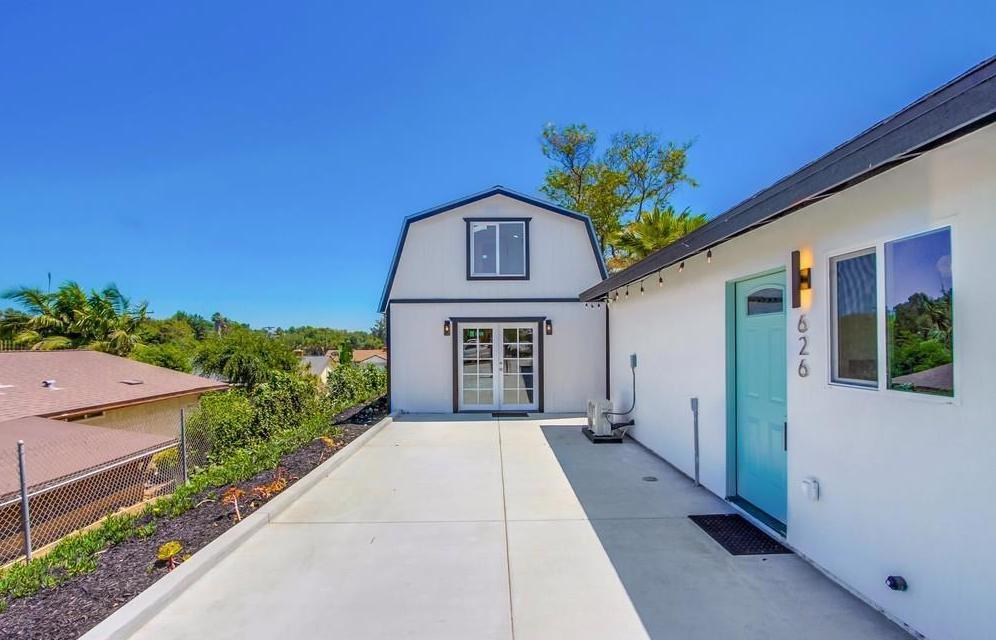
Thinking about building an Accessory Dwelling Unit (ADU) on your San Diego property? You’re not alone. Nearly 20% of all new housing units permitted in San Diego last year were ADUs, reflecting a massive shift in how homeowners approach property development, rental income, and multigenerational living.
As one of the leading remodeling companies San Diego homeowners trust, Remade Home Construction has guided dozens of families through the ADU construction process. This comprehensive guide will walk you through everything you need to know about ADU types, costs, regulations, and the step-by-step construction process specific to San Diego County municipalities.
What is an ADU? Understanding Your Options
An Accessory Dwelling Unit (ADU)—also called a granny flat, in-law suite, or backyard cottage—is a self-contained residential unit located on the same property as a primary home. ADUs must include complete independent living facilities: kitchen, bathroom, sleeping area, and living space.
California’s progressive ADU laws have made building these units more accessible than ever, and San Diego has emerged as one of the most ADU-friendly regions in the state. Whether you’re a residential contractor San Diego professional or a homeowner researching options, understanding the different ADU types is your first step.
Types of ADUs: Which Option Fits Your Property?
1. Detached ADUs (New Construction)
Detached ADUs are standalone structures built separately from your main home, typically in the backyard.
Key Characteristics:
- Maximum size: 1,200 square feet (regardless of main house size)
- Complete independence with separate utilities
- Full design flexibility to match or complement your home’s style
- Maximum height: 24 feet on single-family lots (16 feet on multifamily properties)
- Minimum setbacks: 4 feet from side and rear property lines for units over 16 feet tall
Best For: Homeowners with adequate yard space who want maximum privacy and rental income potential.
2025 Construction Costs: $300,000 – $450,000+ for turn-key construction ($375-$600 per square foot)
Pros:
- Maximum privacy for both residents and ADU occupants
- Higher rental value compared to attached units
- Can be customized to any architectural style
- Separate entrance and utilities appeal to long-term renters
Cons:
- Most expensive ADU option
- Longest construction timeline (4-8 months for build phase alone)
- Requires adequate yard space and proper site access
- Complex utility connections may increase costs
2. Attached ADUs
Attached ADUs connect physically to your primary residence, often as an addition to the side or rear of the home.
Key Characteristics:
- Maximum size: Up to 50% of primary dwelling’s floor area (capped at 1,200 sq ft, minimum 800 sq ft allowed)
- Shared walls reduce construction costs
- Can share some utilities with main house
- Must not exceed height of primary residence or 16 feet (whichever is greater)
Best For: Homeowners seeking cost savings through shared construction or those with limited yard space.
2025 Construction Costs: $250,000 – $380,000+ depending on size and finishes
Pros:
- Lower construction costs than detached units
- Easier utility hookups
- Ideal for aging parents or adult children who want proximity
- Maintains more usable backyard space
Cons:
- Less privacy than detached ADUs
- Rental appeal may be lower due to proximity
- Design must integrate with existing home architecture
- Noise transfer between units can be an issue
3. Garage Conversion ADUs
Converting an existing garage into an ADU represents the fastest and most cost-effective path to creating rental income or additional living space.
Key Characteristics:
- Uses existing structure (foundation, walls, roof)
- No size restrictions as long as converting permitted space
- Can go to property line (setback requirements don’t apply to conversions)
- Retains existing height and footprint
Best For: Homeowners with underutilized garages who want the quickest, most affordable ADU option.
2025 Construction Costs: $150,000 – $250,000 (significantly lower than new construction)
Pros:
- Fastest completion time (2-4 months typically)
- Most affordable ADU option
- Foundation and shell already exist
- Permits often processed more quickly
- No impact on existing yard space
Cons:
- Loss of garage/storage space
- May require parking replacement depending on location
- Size limited to existing garage footprint
- Less design flexibility than new construction
- Older garages may have structural issues requiring remediation
4. Junior ADUs (JADUs)
Junior ADUs are small units created entirely within the existing primary residence, limited to 500 square feet maximum.
Key Characteristics:
- Maximum size: 500 square feet
- Must be completely contained within existing or proposed house
- Can share bathroom with main residence if interior access exists
- Requires owner occupancy (either in JADU or main house)
- Efficiency kitchen required (can be smaller than full kitchen)
Best For: Homeowners wanting minimal construction impact and lowest costs while adding living space.
2025 Construction Costs: $60,000 – $120,000 depending on extent of interior modifications
Pros:
- Lowest cost ADU option
- Minimal exterior construction
- Quick permitting process
- No separate utility connections needed
- Ideal for live-in caregivers or college students
Cons:
- Owner occupancy requirement limits flexibility
- Small size (500 sq ft maximum)
- Lower rental income potential
- Must use existing home’s footprint
- Cannot function as independently as other ADU types
5. Conversion ADUs (Non-Garage)
Beyond garages, homeowners can convert other existing permitted structures like pool houses, sheds, or workshops into ADUs.
Key Characteristics:
- No size restrictions for converting existing permitted space
- Exempt from new setback requirements
- Can utilize accessory structures already on property
- Must meet building and health/safety codes
Best For: Properties with existing outbuildings that are underutilized.
2025 Construction Costs: $120,000 – $280,000 depending on existing structure condition

How Many ADUs Can You Build? Understanding 2025 Regulations
The number of ADUs you can build depends on your lot type and jurisdiction:
Single-Family Residential Lots
State Law (applies everywhere):
- 1 detached ADU (new construction or conversion)
- 1 converted ADU (from existing permitted structure)
- 1 Junior ADU (JADU)
City of San Diego Bonus: Using the Affordable ADU Bonus Program, you can build up to 5 total units:
- 1 standard detached ADU
- 1 converted ADU
- 1 JADU
- 1 income-restricted affordable ADU
- 1 bonus market-rate ADU
Multifamily Residential Lots
As of January 2025 (SB1211):
- Build as many detached ADUs as there are existing units, up to a maximum of 8 detached ADUs
- Plus conversion ADUs equal to 25% of existing residential units
- Before this update, only 2 detached ADUs were permitted
ADU Construction Costs by Type: 2025 San Diego Pricing
Understanding the complete cost picture is essential for budgeting your ADU project. Here’s what san diego adu builders typically see for all-in costs:
Detached ADU (800-1,200 sq ft)
Total Turn-Key Cost: $300,000 – $450,000+
- Design & Architecture: $12,000 – $18,000
- Permits & Plan Check: $6,500 – $21,000 (varies by size and city)
- Site Work & Utilities: $25,000 – $60,000
- Construction (Vertical Build): $240,000 – $360,000
- Contingency (10%): $28,000 – $45,000
Per Square Foot: $375 – $600+
Attached ADU (600-1,000 sq ft)
Total Turn-Key Cost: $250,000 – $380,000
- Design & Architecture: $10,000 – $15,000
- Permits & Plan Check: $6,000 – $16,000
- Site Work & Utilities: $15,000 – $35,000 (often lower due to proximity)
- Construction: $200,000 – $300,000
- Contingency: $19,000 – $30,000
Per Square Foot: $350 – $550
Garage Conversion (400-600 sq ft)
Total Turn-Key Cost: $150,000 – $250,000
- Design & Plans: $8,000 – $12,000
- Permits: $5,000 – $12,000
- Interior Build-Out: $120,000 – $200,000
- Utility Modifications: $10,000 – $20,000
- Contingency: $7,000 – $20,000
Per Square Foot: $300 – $500
Junior ADU (Up to 500 sq ft)
Total Turn-Key Cost: $60,000 – $120,000
- Design & Plans: $4,000 – $8,000
- Permits: $3,000 – $8,000
- Interior Conversion: $50,000 – $95,000
- Contingency: $3,000 – $9,000
Per Square Foot: $250 – $400
Important Cost Factors to Consider
California Construction Cost Index increased 44% from January 2021 to September 2025. An ADU that cost $300,000 in early 2021 now requires approximately $430,000 in 2025/2026.
Hidden Costs That Add Up:
- Utility upgrades and connections: $30,000 – $50,000+
- Sloped lot grading and retaining walls: $15,000 – $40,000+
- Septic system modifications (unincorporated areas): $20,000 – $50,000+
- Tree removal and landscape restoration: $5,000 – $15,000
- Property-specific engineering (soils, drainage): $3,000 – $10,000
- Development impact fees (for units over 750 sq ft): $8,000 – $25,000+
Cost-Saving Opportunities:
- Impact fees are waived for ADUs under 750-800 square feet
- Pre-approved plans can reduce architectural costs and speed permitting
- Garage conversions eliminate foundation and shell costs
- Properties within ½ mile of public transit waive parking requirements
- Some cities offer expedited permitting for qualifying projects

The ADU Construction Process: Step-by-Step Timeline
Understanding the construction timeline helps you plan realistically. Here’s what to expect when working with san diego remodeling contractors:
Phase 1: Feasibility & Property Assessment (1-2 weeks)
What Happens:
- Site evaluation for ADU viability
- Zoning verification and setback analysis
- Utility location and capacity assessment
- Topography and drainage review
- Budget discussion and financing options
Key Deliverable: Feasibility report confirming what can be built on your property
Cost: $1,500 – $3,500 (many contractors include this in design fee. At Remade Home Construction, we are currently offering FREE preliminary feasibility and property assessments! Contact us for more info and to schedule yours!)
Phase 2: Design & Architecture (4-8 weeks)
What Happens:
- Schematic design development
- Architectural plans and elevations
- Structural engineering calculations
- Energy compliance (Title 24) documentation
- Landscape and hardscape integration
- Final plan review and homeowner approval
Key Deliverable: Complete construction document set ready for permit submittal
Cost: $8,000 – $18,000 depending on customization level
Pro Tip: Pre-approved plans can reduce this phase to 1-2 weeks and save $3,000-$8,000, though customization is limited.
Phase 3: Permitting & Approvals (2-6 months)
What Happens:
- Permit application submittal to city/county
- Initial plan check review (30 days minimum)
- Corrections and resubmittals if needed
- Additional agency reviews (fire, health, utilities)
- Final permit issuance
Key Deliverable: Issued building permit allowing construction to commence
Timeline by Municipality:
- City of San Diego: 3-6 months average (faster with pre-approved plans)
- County of San Diego: 4-6 months (in-person submission required)
- Coastal Zone Cities: 5-8 months (requires Coastal Development Permit)
- Chula Vista: 3-4 months
- Oceanside: 4-5 months
- Escondido: 3-5 months
Cost: $6,500 – $21,000 in permit and plan check fees
Note: California law requires cities to approve or deny ADU permits within 60 days, but this timeline assumes complete and accurate initial submittal. Multiple revision rounds commonly extend the process.
Phase 4: Site Preparation & Foundation (2-4 weeks)
What Happens:
- Site clearing and grading
- Temporary utility installation
- Foundation excavation
- Concrete forming and pouring
- Foundation inspection and approval
- Rough utility trenching
Key Milestone: Foundation inspection sign-off
Cost: Included in construction budget, but site-specific conditions can add $10,000 – $40,000
Phase 5: Framing & Rough Construction (6-10 weeks)
What Happens:
- Floor system and walls framing
- Roof structure and sheathing
- Window and door installation
- Rough plumbing installation
- Rough electrical and HVAC installation
- Framing inspection approval
Key Milestone: Framing inspection and rough-in inspections
Pro Tip: Weather in San Diego is generally cooperative, but unexpected rain can cause 1-2 week delays during this phase.
Phase 6: Exterior Finishes & Roofing (3-5 weeks)
What Happens:
- Roofing material installation (composition, tile, or metal)
- Exterior siding or stucco application
- Exterior paint or finishes
- Solar panel installation (required for new detached ADUs)
- Rainwater management systems
Key Milestone: Weather-tight structure allowing interior work
Phase 7: Interior Systems & Insulation (4-6 weeks)
What Happens:
- Insulation installation (walls, ceiling, floors)
- Drywall hanging and finishing
- Interior electrical finish work
- Plumbing fixture installation
- HVAC system completion
- Insulation and drywall inspections
Key Milestone: Rough interior inspections complete
Phase 8: Interior Finishes (4-6 weeks)
What Happens:
- Flooring installation (tile, hardwood, carpet)
- Kitchen cabinet and counter installation
- Bathroom fixture and tile work
- Interior painting
- Trim and door installation
- Hardware and fixture installation
Key Deliverable: Substantially complete interior ready for final touches
Phase 9: Final Inspections & Closeout (1-2 weeks)
What Happens:
- Final building inspection
- Final electrical inspection
- Final plumbing inspection
- Final mechanical inspection
- Corrections to any noted deficiencies
- Certificate of Occupancy issuance
- Owner walkthrough and training
Key Deliverable: Certificate of Occupancy allowing legal occupancy
Total Construction Timeline: 4-8 months from permit to move-in for most projects
Complete Project Timeline (Design Through Completion): 10-18 months average

Municipality-Specific Regulations & Lessons Learned
Each San Diego County jurisdiction has unique requirements. Here’s what we’ve learned building an ADU in San Diego across different municipalities:
City of San Diego
What Makes It Unique:
- Most progressive ADU policies in the county
- Affordable ADU Bonus Program allows up to 5 total units on single-family lots
- AB 1033 adopted (first in county), allowing ADU sale as separate condominiums
- Solar panels required on all new detached ADUs (Title 24)
- 31-day minimum rental period (short-term rentals prohibited unless grandfathered)
Permitting Timeline: 3-6 months average
Lessons Learned:
- Pre-approved plans from city website can reduce approval time to 2-3 months
- Development Services Department offers free virtual consultations—use them!
- Properties near trolley stations often qualify for expedited review
- Historic districts (Mission Hills, North Park) require additional design review
- Coastal Zone properties need Coastal Development Permit (adds 4-8 weeks)
Key Contact: Development Services Department – (619) 446-5000
San Diego County (Unincorporated Areas)
Jurisdictions Covered: Bonita, Bonsall, Del Dios, Fairbanks Ranch, Fallbrook, Hidden Meadows, Lakeside, Mount Helix, Pala, Pauma Valley, Rancho Santa Fe, Rainbow, Spring Valley, Valley Center, 4S Ranch, and portions of many incorporated cities
What Makes It Unique:
- In-person plan submission required (no online portal)
- Fire safety regulations vary significantly by community
- Rancho Santa Fe has strictest standards (sprinklers, water tanks, defensible space)
- County provides pre-approved plans (85% complete)
- Guest quarters have separate regulations (different from ADUs)
Permitting Timeline: 4-6 months average
Lessons Learned:
- Contact local fire department early in design phase
- Septic system properties require extensive health department review
- County planners very helpful—schedule pre-submittal consultation
- Rural areas often require defensible space clearance (100+ feet in high fire zones)
- Well water properties need water quality testing
Key Contact: Planning & Development Services – (858) 505-6445
Coastal Zone Cities (Special Considerations)
Cities Affected: Oceanside, Carlsbad, Encinitas, Solana Beach, Del Mar, La Jolla, Pacific Beach, Coronado, Imperial Beach
What Makes It Unique:
- Coastal Development Permit (CDP) required in addition to building permit
- Stricter setbacks near bluff edges (typically 50 feet minimum)
- 300-foot mean high tide line buffer for expedited process
- California Coastal Commission can appeal certain projects
- Enhanced environmental and public access protections
Additional Timeline: Add 4-8 weeks for Coastal Review
Lessons Learned:
- Engage coastal planner early—regulations complex and site-specific
- Properties between sea and first public road face strictest scrutiny
- View corridors must be protected
- Native landscaping often required
- CDP can sometimes be processed administratively with building permit
Chula Vista
What Makes It Unique:
- Simplified permit process with fee waivers for qualifying projects
- Transit bonus programs near trolley stations
- Strong city support for ADU development
Permitting Timeline: 3-4 months average
Lessons Learned:
- Properties near trolley qualify for height and parking bonuses
- City very responsive to ADU inquiries
- Expedited review available for pre-approved designs
- Some Eastern Chula Vista properties fall under County jurisdiction—verify first
Oceanside
What Makes It Unique:
- Coastal Development Permit required for most properties
- Progressive ADU policies despite coastal constraints
- Good pre-approved plan options
Permitting Timeline: 4-5 months (including coastal review)
Lessons Learned:
- Schedule joint meeting with planning and coastal staff
- Bluff-top properties face significant restrictions
- Excellent city ADU resources online
- Consider view impacts from neighboring properties
Escondido
What Makes It Unique:
- Streamlined ADU applications
- Incentives for sustainable/green designs
- Some neighborhoods under County jurisdiction
Permitting Timeline: 3-5 months average
Lessons Learned:
- Verify whether city or county regulations apply to your specific address
- Historic downtown areas require design compatibility review
- Water and sewer availability varies by neighborhood
- Sloped lots common—budget for additional grading
Carlsbad
What Makes It Unique:
- Coastal Community Plan overlay in western areas
- Height restrictions in view corridors
- Progressive policies balanced with community character preservation
Permitting Timeline: 4-5 months
Lessons Learned:
- Coastal properties face extensive review
- Village area has unique design standards
- Well-organized city ADU webpage with resources
- Pre-development meetings highly recommended
Encinitas
What Makes It Unique:
- Pre-approved ADU plan program (significant time saver)
- Very ADU-friendly policies
- Coastal restrictions in Cardiff, Leucadia areas
Permitting Timeline: 3-4 months (faster with pre-approved plans)
Lessons Learned:
- Use city’s pre-approved plans when possible—saves time and money
- Coastal Development Permit required west of Highway 101
- Historic character districts require design compatibility
- City staff very knowledgeable and helpful

Financing Your ADU: 2025 Options
Most home remodeling San Diego projects require significant capital. Here are your financing options:
Home Equity Line of Credit (HELOC)
Best For: Homeowners with substantial equity who want flexibility
- Rates: 7.5% – 10% variable (2025 rates)
- Pros: Draw only what you need, interest-only payment option during construction
- Cons: Variable rates can increase, lien on property
Cash-Out Refinance
Best For: Homeowners with low existing mortgage rates who need large amounts
- Rates: 6.5% – 8% fixed (2025 rates)
- Pros: Fixed rate, predictable payment, potentially tax-deductible
- Cons: Resets mortgage term, closing costs, replaces low rate with higher rate
Construction-to-Permanent Loan
Best For: Those building new detached ADUs who want specialized financing
- Rates: 7% – 9% (2025 rates)
- Pros: Single loan for construction and permanent financing, interest-only during construction
- Cons: Higher rates than traditional mortgages, shorter terms
San Diego Housing Commission ADU Finance Program
Best For: Moderate-income homeowners within City of San Diego limits
- Rates: Below market rates
- Amount: Up to $250,000
- Pros: Low rates, technical assistance included, construction-to-permanent
- Cons: Income qualifications required, must rent at affordable rates for 7 years, limited funding (FY 2025 allocation exhausted, some FY 2024 funds may remain)
CalHFA ADU Grant Program
Best For: Qualifying homeowners statewide
- Amount: Up to $40,000 for pre-construction costs (design, permits, site prep)
- Pros: Grant (not loan), can cover substantial upfront costs
- Cons: Income and property qualifications, limited funding, reimbursement program
FHA 203(k) Rehabilitation Loan
Best For: Homebuyers purchasing property planning ADU addition
- Rates: FHA rates (currently 6.5% – 7.5%)
- Pros: Single loan for purchase and ADU construction, low down payment
- Cons: FHA limits apply, extensive documentation required
Return on Investment: What to Expect
ADUs offer multiple financial benefits beyond rental income:
Rental Income Potential (2025 San Diego Market)
Studio ADU (400-500 sq ft): $1,800 – $2,500/month 1-Bedroom ADU (600-800 sq ft): $2,200 – $3,200/month 2-Bedroom ADU (900-1,200 sq ft): $2,800 – $4,000/month
Annual Rental Income: $26,000 – $48,000 depending on size and location
Property Value Increase
According to UCLA’s Lewis Center for Regional Policy Studies (2024), permitted ADUs in Southern California increase home values by $150,000 – $300,000 depending on size and integration.
National Association of Realtors data shows homes with ADUs sell for approximately 35% more on average in major U.S. cities.
Payback Period
With typical rental rates and construction costs, most San Diego ADU contractors see homeowners achieving positive cash flow within 5-10 years, assuming:
- 20% down payment or equity-financed construction
- Market-rate long-term rental
- Professional property management (or self-management)
Tax Advantages
- Mortgage interest deduction on construction loan
- Depreciation of ADU structure (commercial property rules)
- Expense deductions for maintenance, repairs, property management
- Potential 1031 exchange possibilities when selling
Consult with a tax professional—ADU tax treatment varies by situation.

Common Pitfalls to Avoid
After managing numerous room addition San Diego and ADU projects, we’ve seen these mistakes cost homeowners time and money:
1. Underestimating Total Costs
The Problem: Focusing only on construction costs, ignoring design, permits, site work, and utilities. The Solution: Budget 20-25% above contractor’s construction estimate for soft costs and contingencies.
2. Skipping Feasibility Assessment
The Problem: Investing in design only to discover property constraints prevent ADU construction. The Solution: Always start with professional feasibility study ($1,500-$3,500) before design investment.
3. Choosing Contractor on Price Alone
The Problem: Lowest bid often comes from inexperienced or poorly-capitalized contractors. The Solution: Evaluate experience, ADU-specific portfolio, references, and licensing carefully.
4. Incomplete Permit Submittals
The Problem: Missing documentation causes delays and multiple resubmittal cycles. The Solution: Work with experienced ADU architects near me familiar with local requirements.
5. Ignoring Rental Market Research
The Problem: Building ADU that doesn’t match market demand or achievable rents. The Solution: Research comparable rentals in your neighborhood before finalizing design.
6. Failing to Plan for Construction Impact
The Problem: Underestimating noise, dust, yard disruption, and timeline on daily life. The Solution: Realistic expectations and communication with family. Consider temporary relocation for major phases.
7. Neglecting Long-Term Maintenance
The Problem: Not budgeting for ongoing maintenance, repairs, and property management. The Solution: Budget 1-2% of ADU value annually for maintenance, plus property management if renting.
Working with the Right Team: What to Look For
Successful ADU projects require experienced professionals. Here’s what to seek in your San Diego home remodeling contractors:
Qualities of Excellent ADU Contractors
- ADU-Specific Experience: Portfolio of completed ADUs, not just general construction
- Design-Build Capability: Single point of contact for design through construction
- Local Jurisdiction Knowledge: Familiarity with specific city/county requirements
- Transparent Pricing: Detailed cost breakdowns with clear scope of work
- Strong References: Recent ADU clients willing to share experiences
- Proper Licensing: Valid CA contractor license, bonding, and insurance
- In-House Team: Direct employees rather than subcontractor networks
- Realistic Timelines: Conservative scheduling rather than optimistic promises
Questions to Ask Potential Contractors
- How many ADUs have you completed in San Diego County?
- Can you provide references from recent ADU clients?
- Do you handle both design and construction, or will I need separate architect?
- What is your typical timeline from contract to completion?
- How do you handle cost overruns and change orders?
- What is included in your base price versus optional upgrades?
- Do you pull all permits and schedule inspections?
- What is your warranty and post-completion support?
- How do you handle project communication and progress updates?
- What happens if the project timeline extends beyond original schedule?
Red Flags to Watch For
- Pressure to sign contract immediately
- Unwillingness to provide detailed written estimates
- No physical business address or showroom
- Requests for large upfront deposits (>10% unusual)
- Inability to provide recent ADU references
- Vague or evasive answers about licensing and insurance
- Promises that sound too good to be true (very low prices, very short timelines)
Conclusion: Making Your ADU Dream Reality
Building an ADU represents one of the smartest investments San Diego homeowners can make in 2025. Whether you need multigenerational housing, rental income, or simply want to maximize your property’s potential, ADUs offer unmatched flexibility and return on investment.
The key to success lies in thorough planning, realistic budgeting, and partnering with experienced professionals who understand the unique requirements of San Diego County municipalities.
As experienced contractors san Diego families trust, Remade Home Construction has guided homeowners through every step of the ADU journey—from initial feasibility through final certificate of occupancy. Our design-build approach ensures seamless coordination, transparent pricing, and quality construction that adds lasting value to your property.
Start Your ADU Journey with Confidence: Free Feasibility Study & Project Discovery
The difference between a successful ADU project and a costly mistake comes down to planning. Before investing thousands in design or breaking ground, you need to understand exactly what’s possible on your specific property.
That’s why we’re offering San Diego homeowners a comprehensive, no-obligation ADU Discovery Package—completely free. Contact us for more info and to schedule yours, no strings.
What’s Included in Your Free ADU Discovery Package:
1. Complete Property Feasibility Analysis Our team will visit your property to assess:
- Zoning compliance and setback requirements
- Utility capacity and connection points
- Site access and grading considerations
- Existing structure conversion potential
- Municipality-specific regulations affecting your property
- Identify potential challenges before they become expensive surprises
2. Preliminary Construction Estimate Based on your property assessment, we’ll provide:
- Estimated costs for different ADU types suitable for your lot
- Site-specific cost factors (utilities, grading, access)
- Realistic timeline projections from design through completion
- Financing considerations and budget planning guidance
- Comparison of options to help you make informed decisions
3. Project Discovery Consultation During our in-depth consultation, we’ll discuss:
- Your goals (rental income, family housing, property value)
- Design preferences and must-have features
- Budget parameters and financing options
- Next steps and recommended timeline
- Answers to all your questions from our experienced team
4. Custom Action Plan You’ll walk away with:
- Written feasibility summary specific to your address
- Preliminary cost range for your preferred ADU type
- Recommended next steps with realistic timelines
- Resources for financing and program eligibility
- Clear understanding of what’s possible on your property
Why Choose Remade Home Construction for Your ADU?
As one of San Diego’s most trusted ADU builders San Diego families rely on, we bring:
✓ Design-Build Expertise – Single point of contact from concept through completion
✓ Local Knowledge – Extensive experience navigating San Diego County’s unique municipal requirements
✓ Transparent Pricing – No surprises, no hidden costs, no change order games
✓ Proven Track Record – Portfolio of completed ADUs across San Diego County
✓ Veteran-Owned Values – Integrity, precision, and commitment to excellence
✓ Full-Service Approach – We handle design, permitting, construction, and final inspections
Ready to Discover Your Property’s ADU Potential?
Don’t waste time and money wondering what’s possible. Get definitive answers from San Diego’s trusted san diego adu contractor team.
Schedule Your Free ADU Discovery Package →
Limited Availability: We limit free feasibility studies to ensure each homeowner receives thorough attention. Discovery packages are scheduled on a first-come, first-served basis.
Your ADU journey starts with a single conversation. Let’s make your vision reality.
Wishing you the best in your ADU journey,
The Remade Home Construction Team
Remade Home Construction is a US Navy Veteran-owned residential general contractor san diego homeowners trust for ADU construction, kitchen remodel san diego projects, bathroom remodel san diego work, home additions san diego, and complete property transformations throughout San Diego County.

Frequently Asked Questions
Q: Do I need to live on the property if I build an ADU?
A: No owner-occupancy requirement exists for standard ADUs through at least 2025. However, Junior ADUs (JADUs) require the property owner to live in either the main house or the JADU itself.
Q: Can I use my ADU as an Airbnb or short-term rental?
A: Generally no. City of San Diego requires 31-day minimum rentals for ADUs unless the property held a valid short-term rental license prior to 2017. State law prohibits short-term rentals under 30 days for ADUs to preserve long-term housing stock.
Q: How long does it take to build an ADU from start to finish?
A: Most projects take 10-18 months total. This breaks down to: feasibility (1-2 weeks), design (4-8 weeks), permitting (2-6 months), and construction (4-8 months). Garage conversions can be completed in as little as 6-8 months total.
Q: Do I need to provide parking for my ADU?
A: Parking requirements are waived for ADUs if your property is:
- Within ½ mile of public transit
- In a historic district
- Converting existing garage/structure to ADU
- Attached to existing/proposed primary residence
Q: Will building an ADU affect my property taxes?
A: Yes, your property will be reassessed and property taxes will increase based on the added value. However, the increase is typically offset by rental income within 1-2 years.
Q: Can I sell my ADU separately from my main house?
A: As of August 2025, the City of San Diego adopted AB 1033, allowing ADUs to be sold as separate condominiums. This makes San Diego the first city in the county to adopt this option. Other jurisdictions are considering similar ordinances.
Q: What if my homeowners association (HOA) doesn’t allow ADUs?
A: California law prohibits HOAs from banning ADUs entirely. While HOAs may impose reasonable design and aesthetic standards, they cannot prohibit construction of ADUs that comply with state law.
Q: Do I need separate utility meters for my ADU?
A: It depends. Detached ADUs typically require separate water, gas, and electrical connections. Attached ADUs and JADUs can often share utilities with the main house, though separate metering may benefit landlords for billing purposes.
Q: What happens if I build an ADU without permits?
A: Unpermitted ADUs create serious problems: inability to legally rent, difficulty selling property, liability issues, potential fines, and requirement to bring to code or remove. AB 2533 (2024) created a pathway to permit ADUs built before January 1, 2020, but extensive upgrades are typically required.
Q: Are there size limits for ADUs in San Diego?
A: Yes:
- Detached ADUs: Maximum 1,200 sq ft
- Attached ADUs: Up to 50% of main house (max 1,200 sq ft, min 800 sq ft)
- Junior ADUs: Maximum 500 sq ft
- Conversion ADUs: No size restrictions (existing structure size is limit)